Article 001
Medical college is more than a training ground for doctors.
A reflection on medical education, innovation, entrepreneurship and the possibilities we are yet to create within medical colleges.
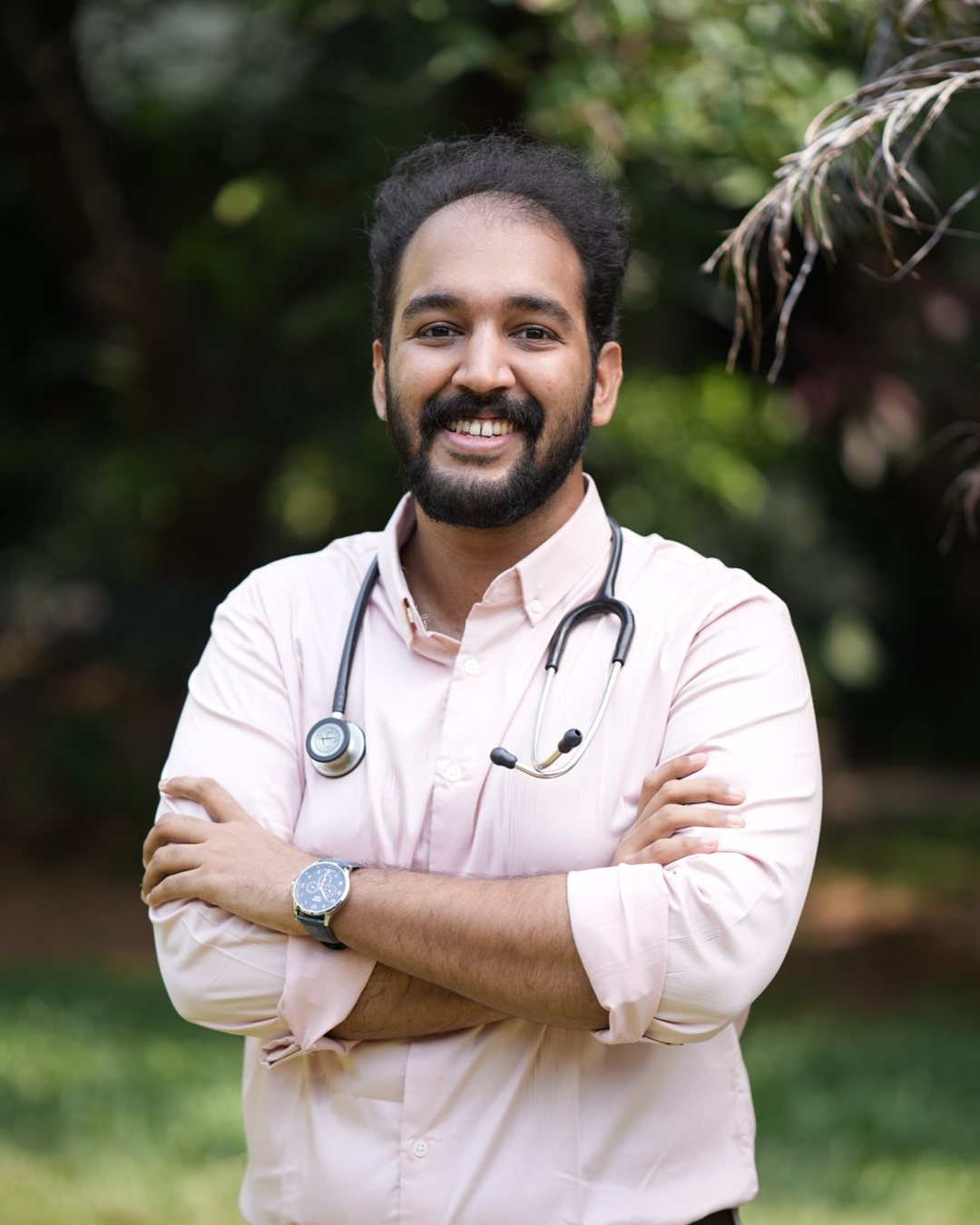
Dr. Sidharth NarayananHouse Surgeon, GMC Kozhikode · 290+ days into internship
November 2026 · 7 min read
Red a critiqueBlack an insightBlue the evidence
Medical colleges are designed to train doctors. That is their primary responsibility, and rightly so.
But I have increasingly found myself asking a different question: Is that all a medical college should aspire to be?
Should a medical college only prepare students to become competent clinicians? Or should it also be an environment where students can explore research, develop technologies, build products, pursue entrepreneurship and contribute to solving some of the larger problems in healthcare?
This question has been on my mind for some time.
It became particularly interesting when I came across Paul Graham’s essays[1] on universities, entrepreneurship and the environment required for young founders to build something meaningful. It made me think about the environment in which we train future doctors, and the opportunities that medical colleges currently provide — or fail to provide — beyond conventional clinical training.
The undergraduate experience
Medical education is demanding. The volume of information students are expected to absorb is enormous, and much of the undergraduate experience revolves around lectures, practical examinations, university examinations and clinical postings.
Over time, students develop their own ways of navigating this system. Some rely heavily on classroom teaching, while others increasingly turn towards self-paced learning, online resources and medical educational platforms.
In many colleges, students also engage extensively in extracurricular activities, including politics, arts, sports and cultural events. These experiences have their own importance. They contribute to personality, leadership, teamwork and the overall college experience.
Yet there is a question worth examining.
How many students genuinely engage with everything they are expected to learn? How many develop a strong understanding of the subjects they study? How many reach their clinical postings with the confidence to apply their theoretical knowledge?
It is not unusual to see students struggle to keep up with the curriculum, disengage from routine teaching and then work intensively towards university examinations.
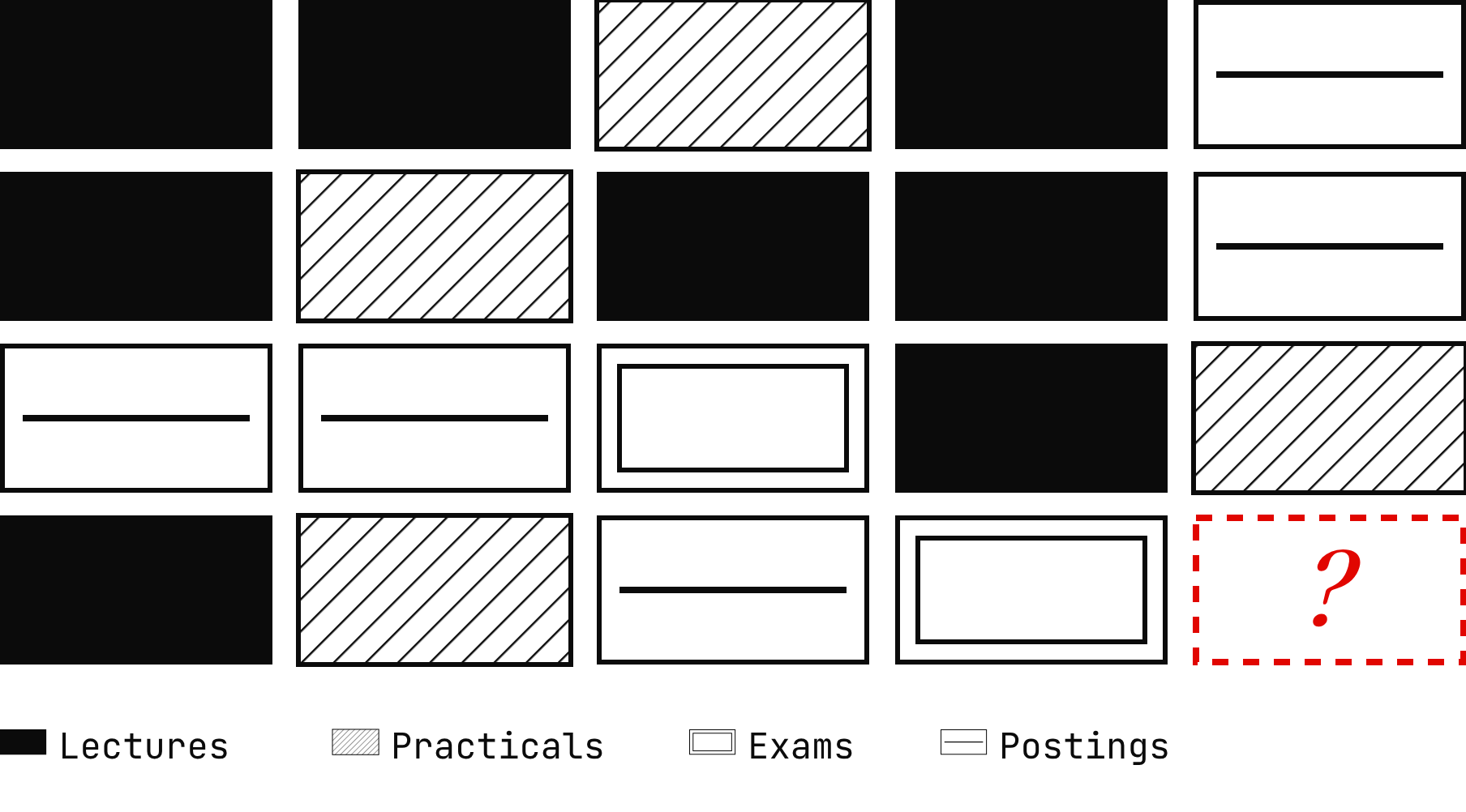
I do not think this is simply a question of student motivation. We need to examine the learning environment itself, the way knowledge is delivered, the expectations placed on students and the gaps that remain when they move from one stage of training to another.
We should be able to identify these gaps and address them better.
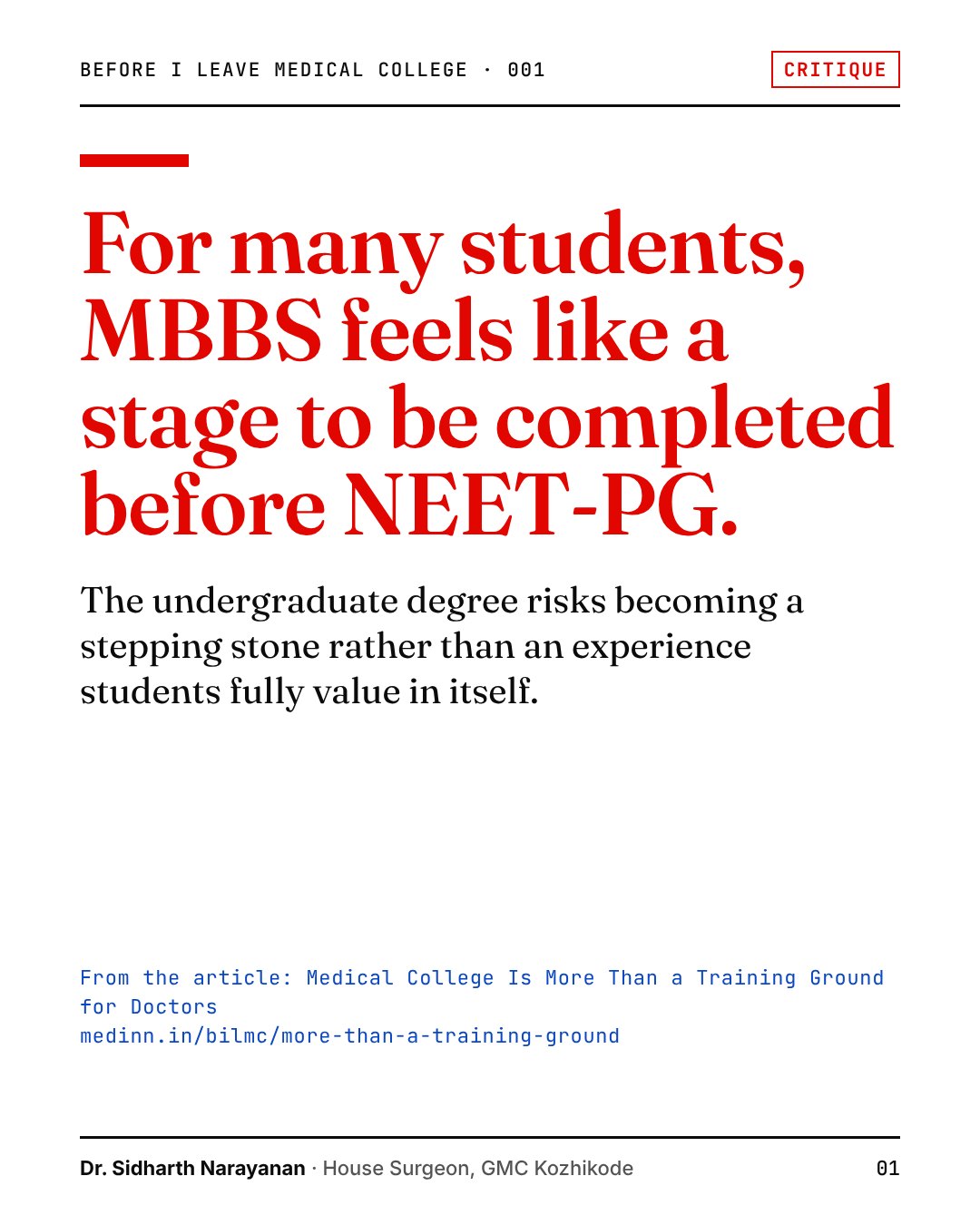
There is also a larger perception surrounding the MBBS degree. For many students, undergraduate medical education increasingly feels like a stage to be completed before preparing for NEET-PG.
The undergraduate degree risks becoming a stepping stone rather than an experience that students fully value in itself.

We need to improve this experience. But I believe there is another dimension to this conversation.
What else could a medical college enable?
A medical college is an unusual environment.
It brings together people who are constantly exposed to clinical problems, healthcare delivery challenges, patient experiences and the practical limitations of existing medical systems.
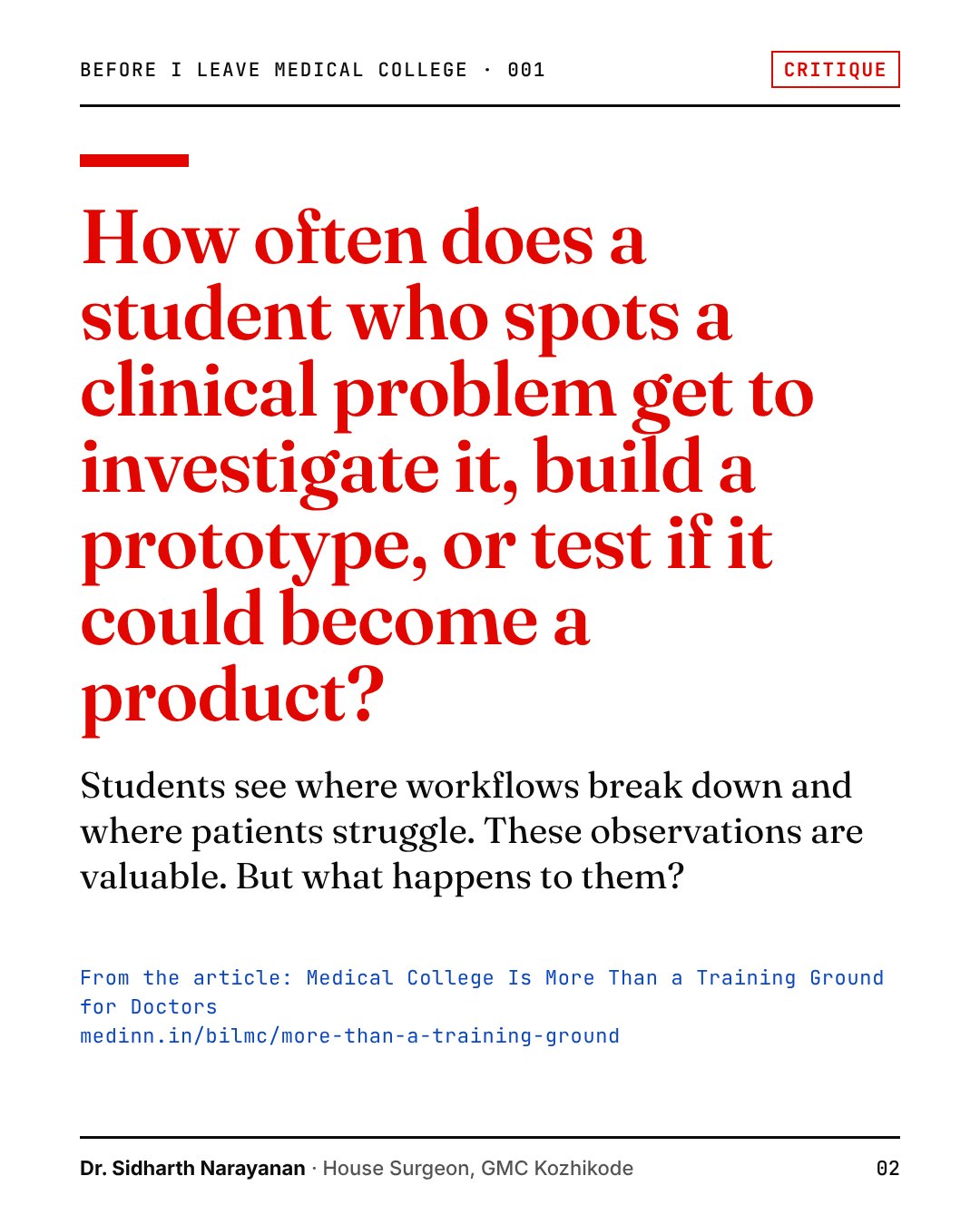
Students observe how hospitals function. They see where workflows break down, where resources are limited, where existing products are inadequate and where patients encounter difficulties.
These observations are valuable.
But what happens to them?
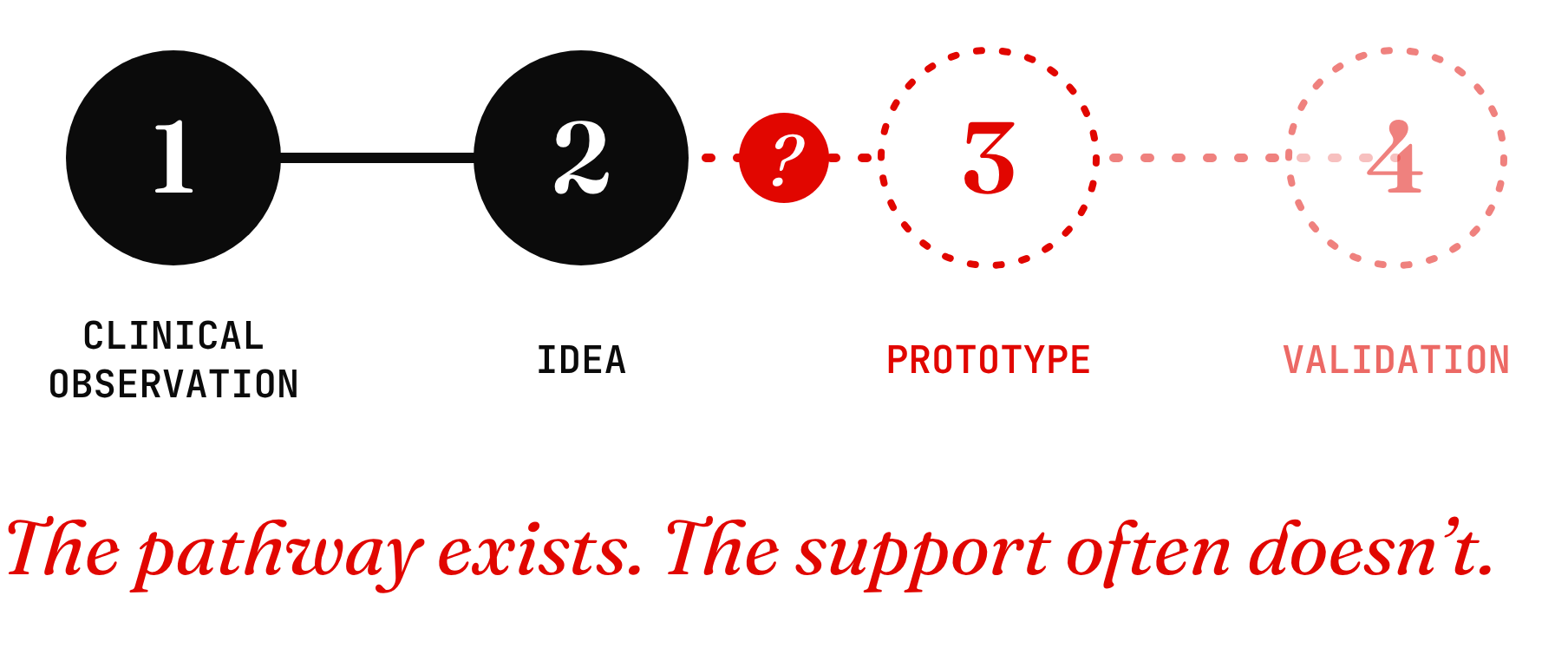
How often does a student who identifies a clinical problem get the opportunity to investigate it, collaborate with an engineer, develop a prototype, explore a solution or understand whether that solution could become a viable product?
How often do medical students get to participate in building something rather than simply learning how to use what already exists?
I believe this is an opportunity we have not explored sufficiently.
Not every medical student needs to become an entrepreneur. Not everyone needs to pursue research or technology development. Clinical practice itself is a demanding and deeply valuable profession.
But students who want to explore these avenues should not feel that they are doing something outside the scope of medical education.
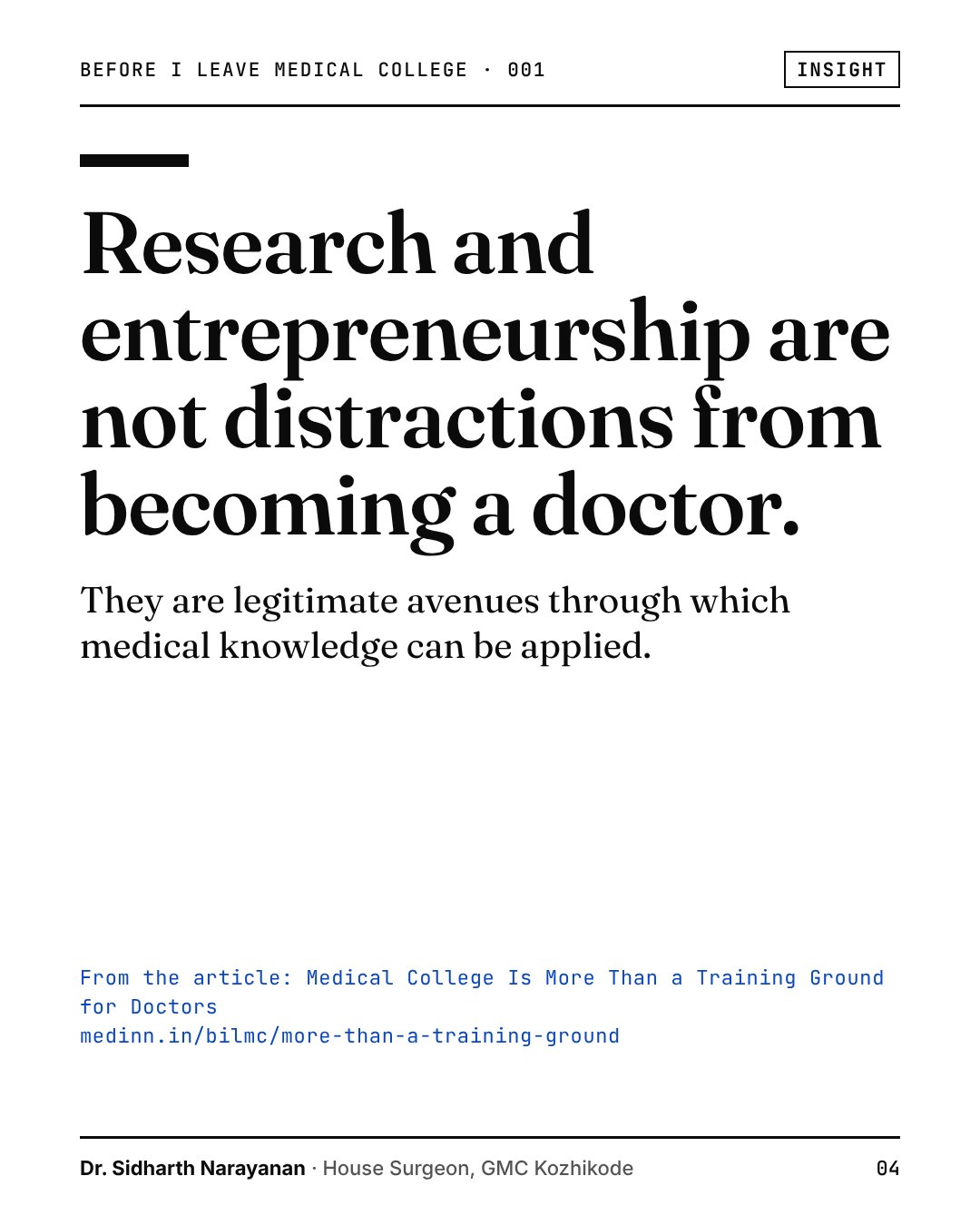
Entrepreneurship and research should not be treated as distractions from becoming a doctor.
They should be recognised as legitimate avenues through which medical knowledge can be applied.
A curious reversal
Something particularly interesting is happening across India’s technological institutions.
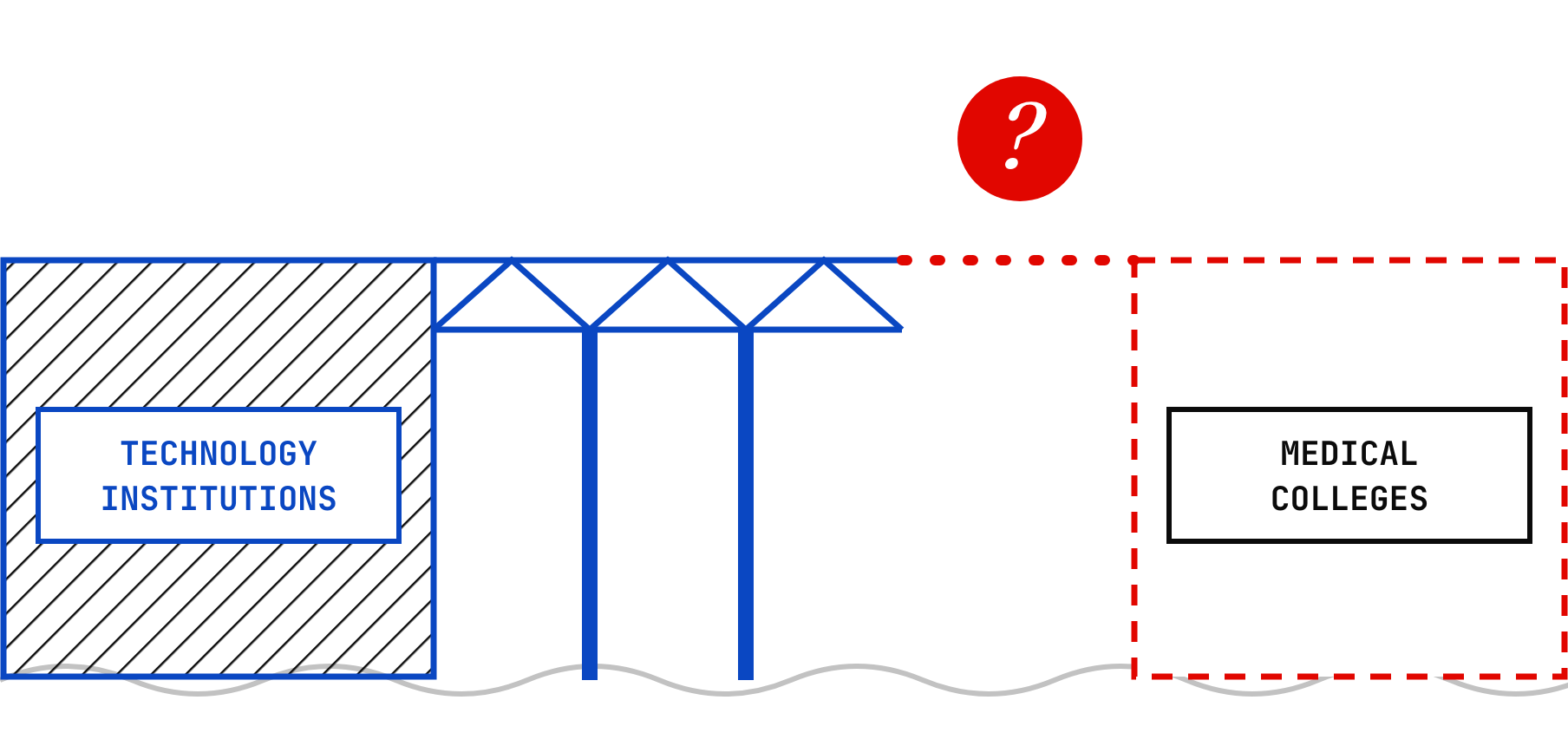
Institutions such as IIT Madras, IIT Kharagpur[4] and IIT Kanpur[5] have been developing initiatives that bring medical sciences and technology closer together.
IIT Madras, for instance, has established a Department of Medical Sciences and Technology[2] and introduced an interdisciplinary undergraduate programme in Medical Sciences and Engineering.[3]
These initiatives reflect an important recognition: technological development in healthcare requires a closer relationship between medicine and engineering.
But this raises a question from the other direction.
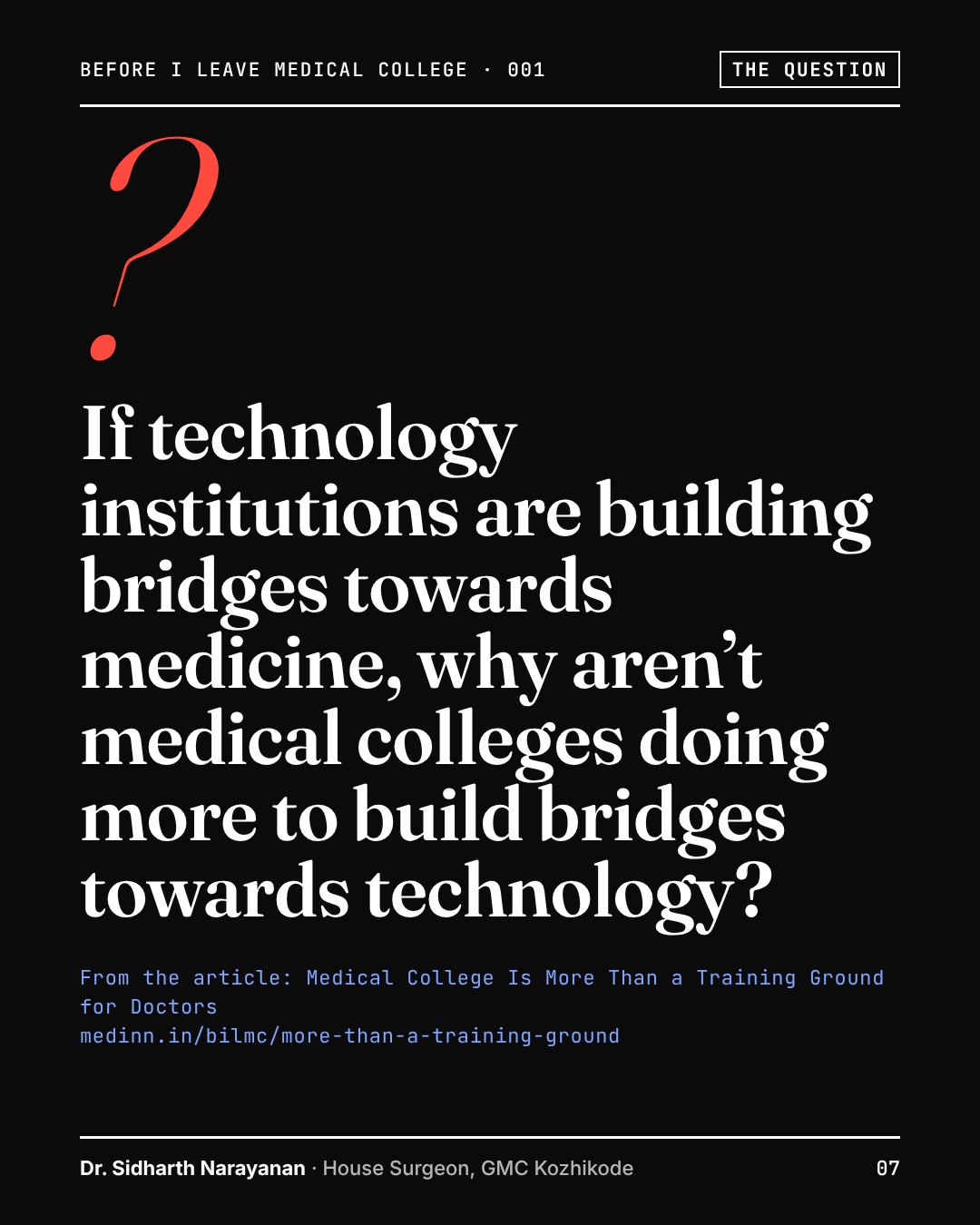
If technological institutions are building bridges towards medicine, why aren’t medical colleges doing more to build bridges towards engineering and technology?
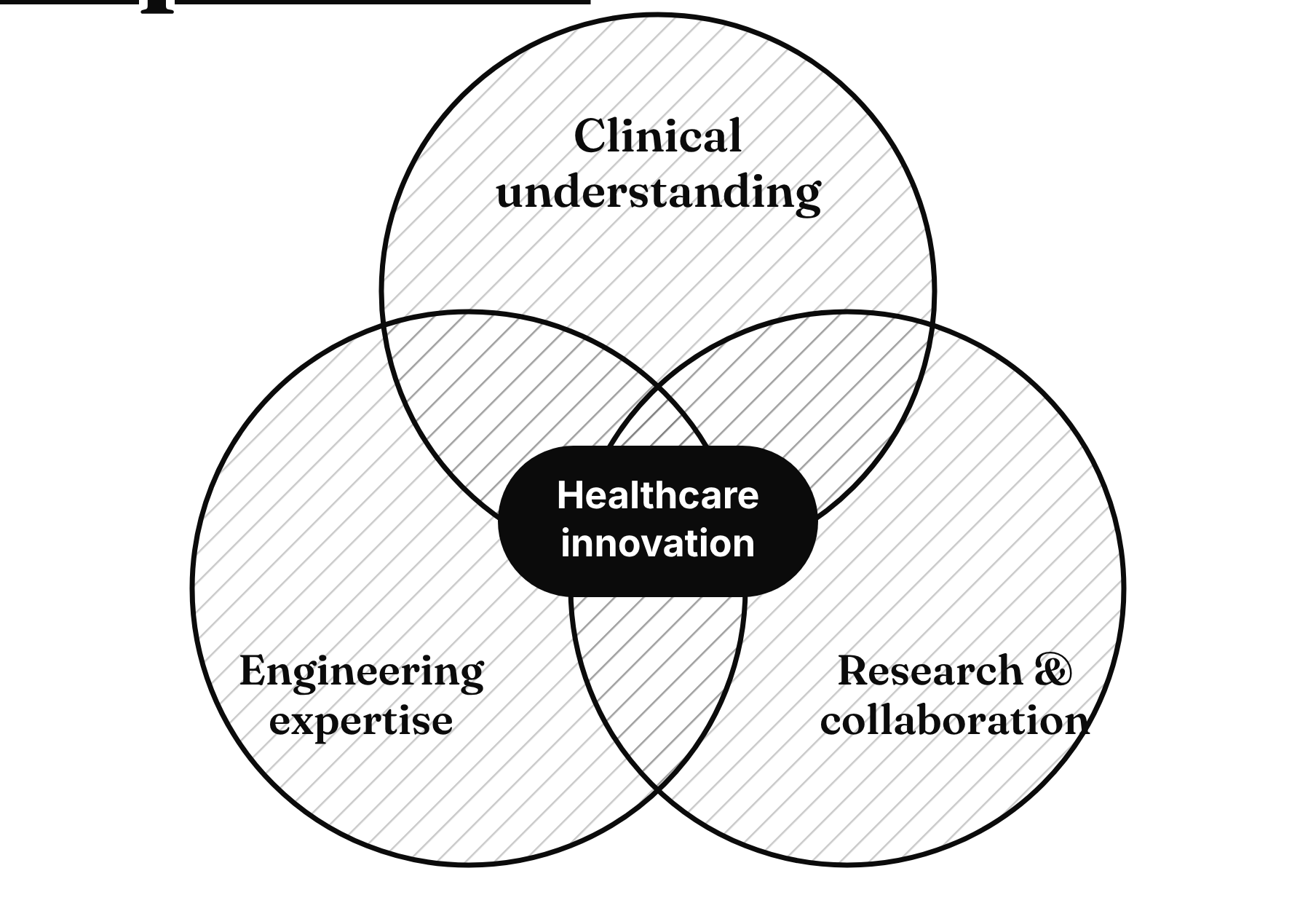
Medical students understand clinical problems, patient needs and hospital workflows. Engineering students may have the technical expertise to develop solutions. Researchers, designers and business professionals bring other capabilities.
The opportunity lies in bringing these people together.
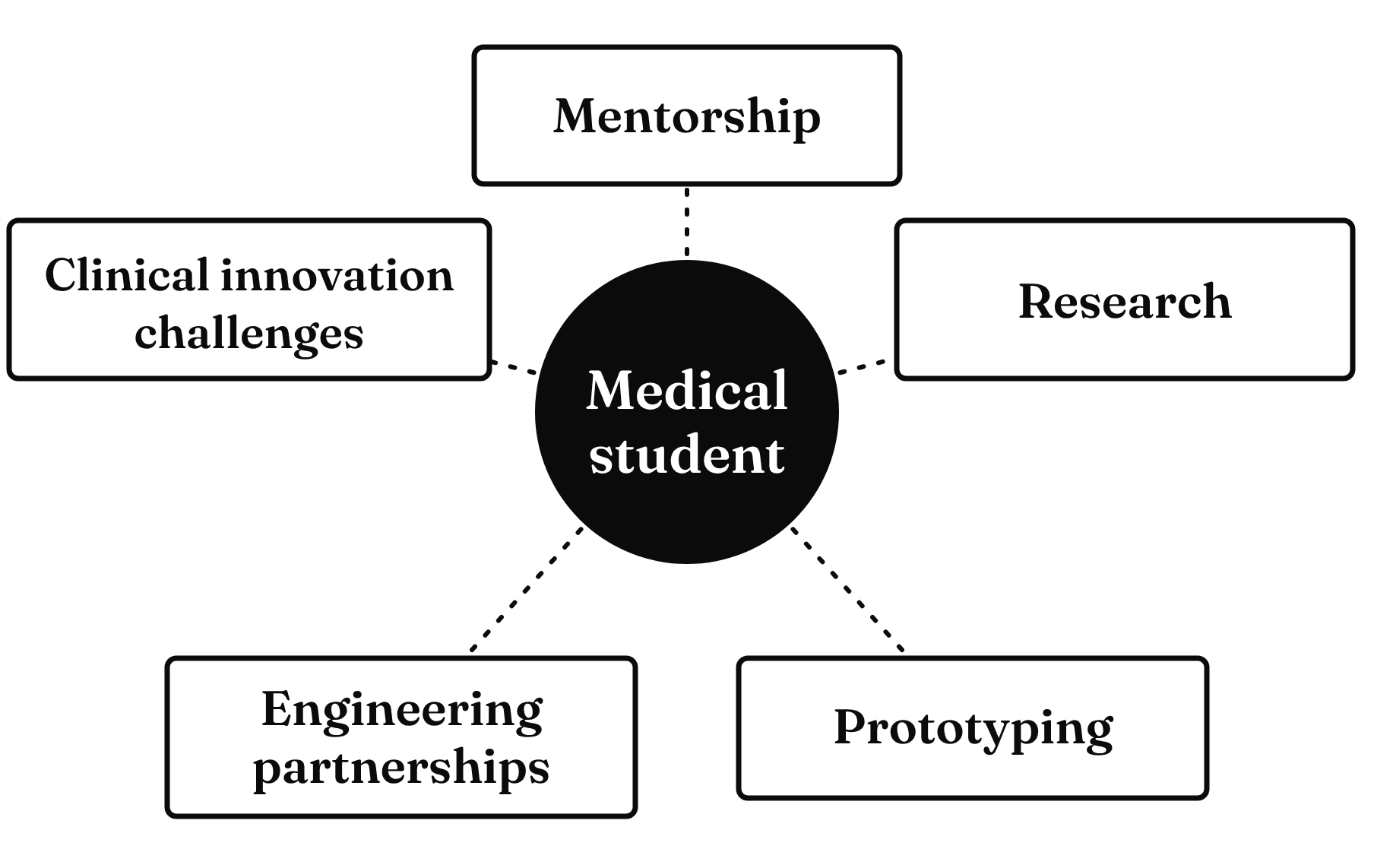
A medical student should be able to find an engineering collaborator, approach a mentor, investigate a clinical problem, develop an early prototype and understand the process of taking an idea further.
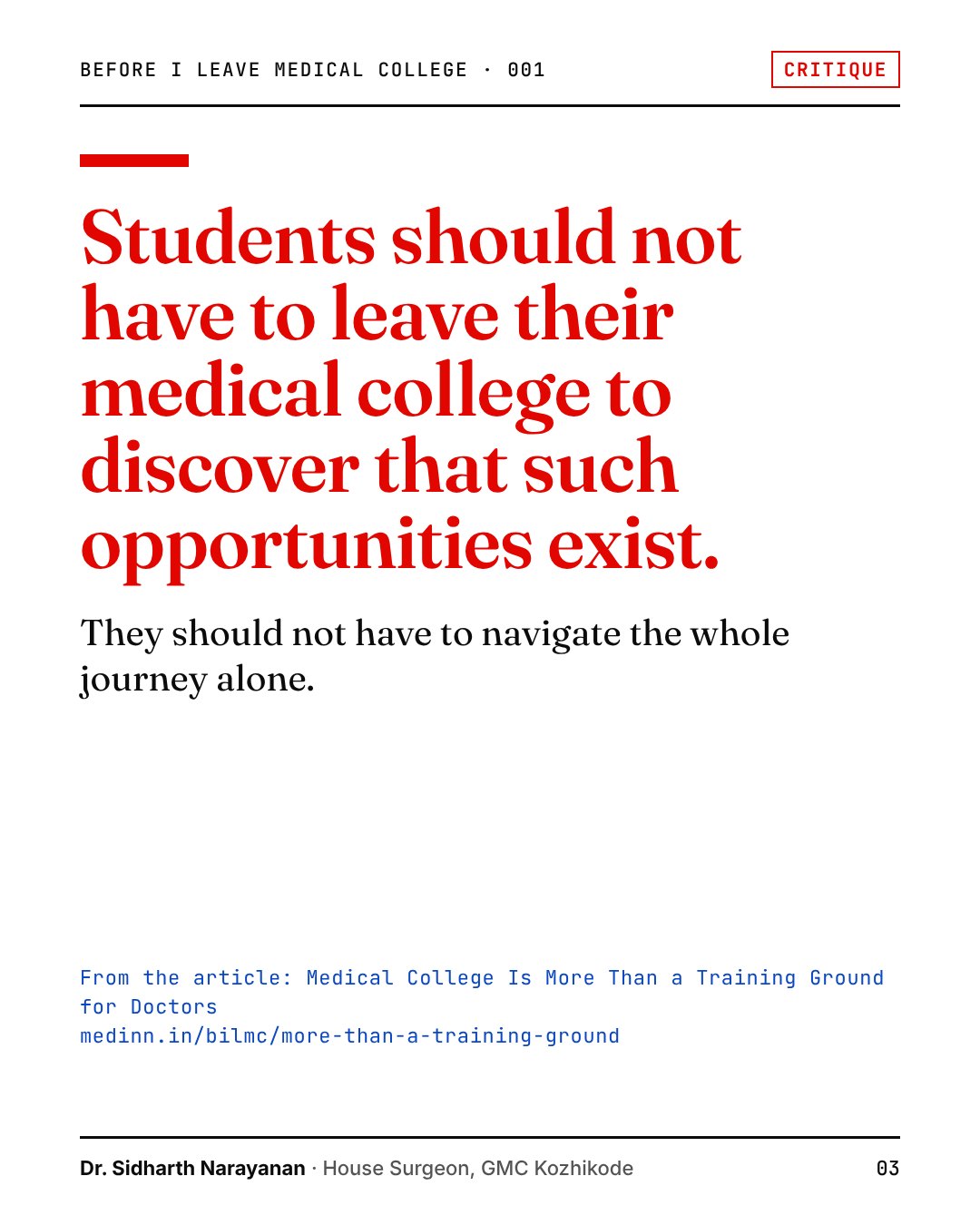
They should not have to navigate this entire journey alone.
And they should not have to leave their medical college to discover that such opportunities exist.
We don’t necessarily need another compulsory subject
I am not suggesting that entrepreneurship should become another compulsory subject in the MBBS curriculum.
We already have an extensive curriculum, and simply adding another course may not solve anything.
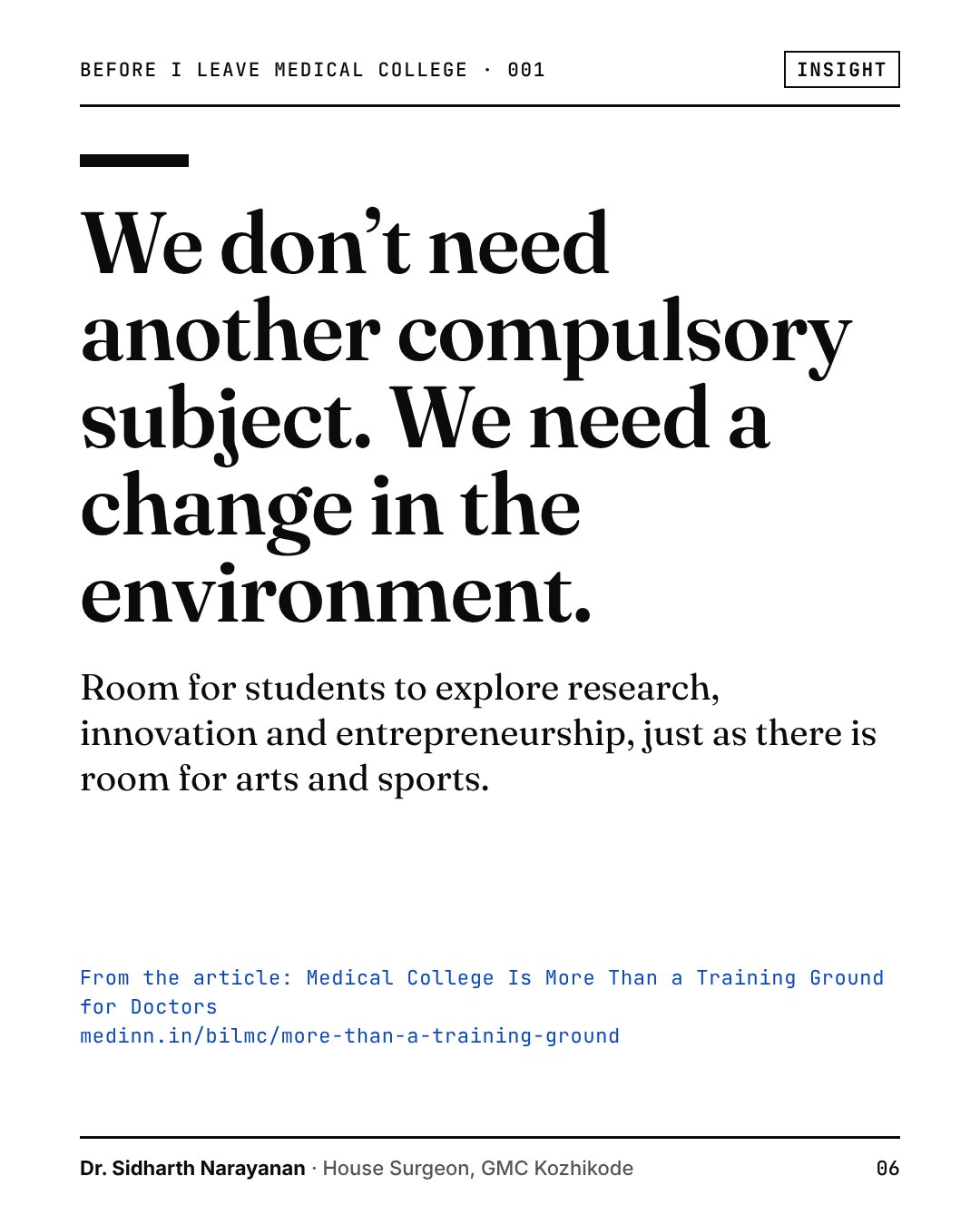
What I am advocating is a change in the environment.
Medical colleges should create sufficient room for students to explore interests beyond conventional teaching and examinations.
Just as students find opportunities to participate in arts, sports and other activities, those interested in research, innovation and entrepreneurship should have an institutional environment that supports them.
This could include:
- Research opportunities and accessible mentorship.
- Collaboration with engineering and technology institutions.
- Innovation challenges based on real clinical problems.
- Access to prototyping facilities and technical expertise.
- Opportunities to work with hospitals, manufacturers and healthcare startups.
- Recognition for meaningful research, innovation and interdisciplinary projects.
There are already examples within the broader education system that could offer useful lessons.
APJ Abdul Kalam Technological University’s (KTU) activity-point framework[6], for example, recognises certain extracurricular, innovation, research and other activities as part of the undergraduate engineering experience.
Could we explore an appropriately adapted approach within medical education?
Not as a mechanical addition of points, but as a way of recognising that meaningful learning can happen beyond the classroom.
A student who identifies a problem in a hospital, works with an interdisciplinary team and develops a potential solution should have a way to pursue and demonstrate that work.
The capabilities are already there
Medical students develop a particular set of capabilities during their training.
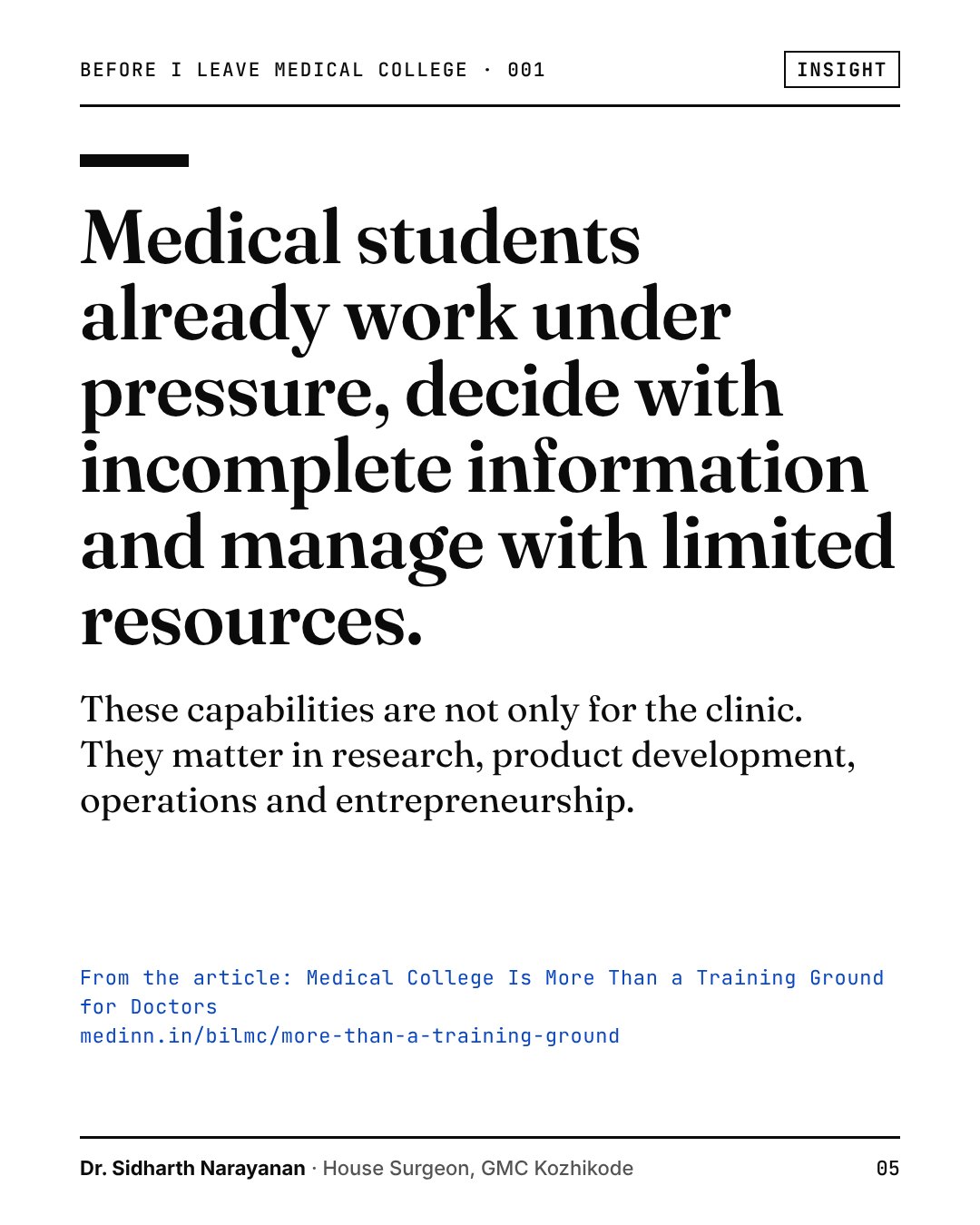
They learn to function under pressure, make decisions with incomplete information, manage competing responsibilities and work within resource constraints.
They encounter complex human problems and learn to approach them systematically.
These capabilities are not relevant only to clinical practice.
They can also be valuable in research, product development, healthcare operations, entrepreneurship and the development of new services.
What is often missing is the exposure, technical understanding, network and institutional support required to translate these capabilities into something tangible.
This is where medical colleges can play a much larger role.

What kind of medical college should we be building?
I think we need to approach this conversation from two directions.
First, we must improve the education we already provide. We need to make undergraduate learning more effective, identify knowledge and competency gaps, strengthen clinical exposure and ensure that students graduate with the capabilities expected of them.
Second, we must expand our understanding of what medical education can enable.
A medical college should be a place where students can learn medicine, but also discover the many ways in which medicine intersects with technology, research, business, public health and society.
It should be possible to pursue clinical excellence while also exploring innovation.
It should be possible to identify a problem in a hospital and find the people, resources and institutional support required to work on it.
And it should be possible for students to develop ideas that may eventually contribute to better healthcare delivery.
I have had opportunities to engage with parts of Kerala’s startup and innovation ecosystem, including Kerala Startup Mission[7] and the IEDC ecosystem. These experiences have made me appreciate the importance of exposure, mentorship, networks and institutional support.
They have also made me think about how much more could be achieved if medical colleges were more closely connected to these ecosystems.
I do not claim to have all the answers. Nor do I think there is one institutional model that can be adopted everywhere.
But I do believe that these questions deserve to be asked.
As I approach the end of my time in medical college, I want to document these observations, examine the gaps and explore the possibilities for making the experience better for those who come after us.
Perhaps the starting point is simple.
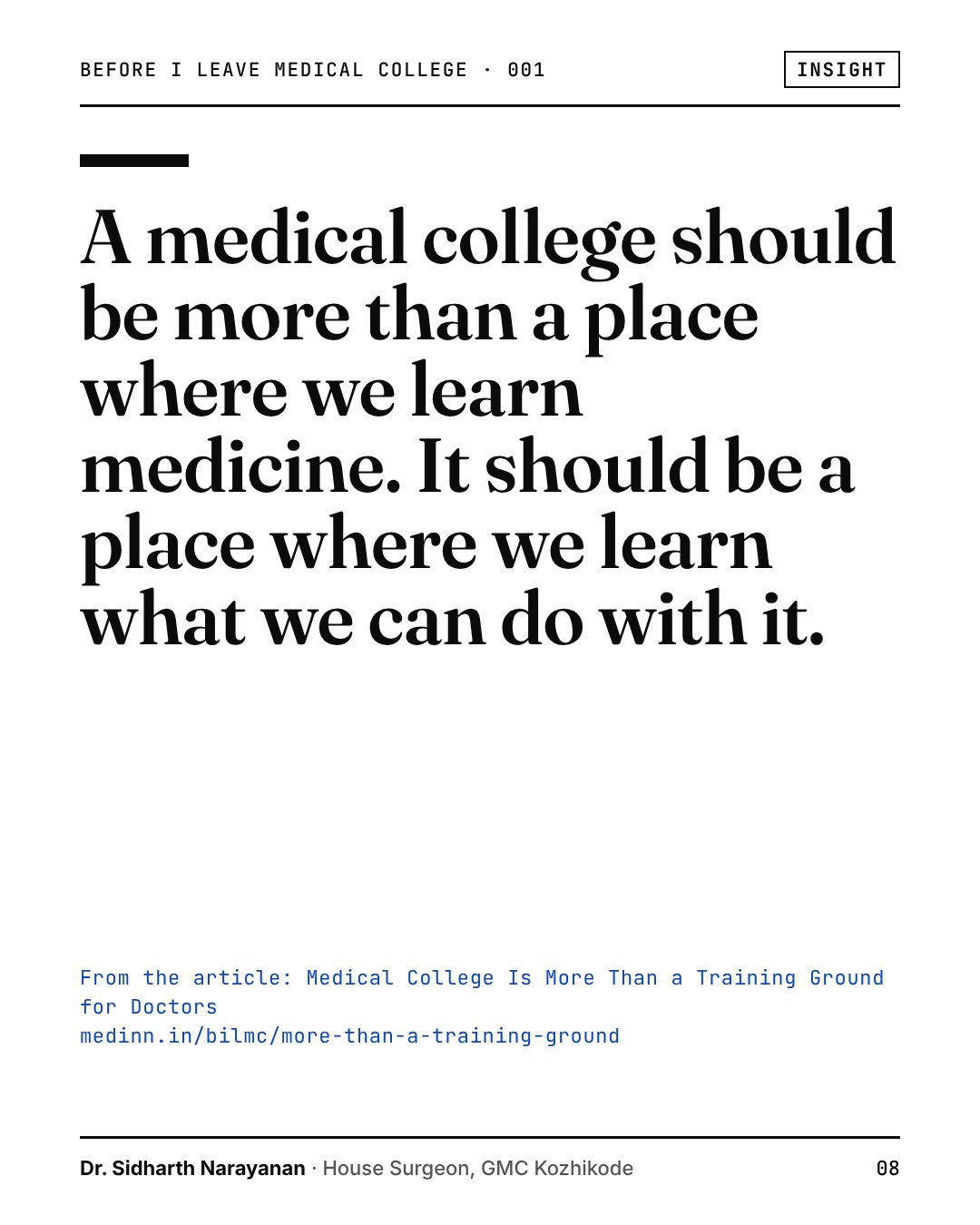
A medical college should be more than a place where we learn medicine. It should be a place where we learn what we can do with it.
Dr. Sidharth Narayanan
House Surgeon, GMC Kozhikode
Share the idea you liked
Pick a card for Instagram, WhatsApp or LinkedIn. Or highlight any line in the article and tap “Share this line” to make your own card.
Sources and references
- [1] Paul Graham, essays on universities, startups and young founders. paulgraham.com
- [2] IIT Madras, Department of Medical Sciences and Technology (launch announcement). iitm.ac.in
- [3] IIT Madras, BS in Medical Sciences and Engineering (programme site). admissions-bsmse.iitm.ac.in
- [4] IIT Kharagpur, School of Medical Science and Technology (Master’s in Medical Science and Technology). iitkgp.ac.in/mmst
- [5] IIT Kanpur, Gangwal School of Medical Sciences and Technology. iitk.ac.in
- [6] APJ Abdul Kalam Technological University (KTU), B.Tech activity-point norms. ktu.edu.in
- [7] Kerala Startup Mission. startupmission.kerala.gov.in
Say it anonymously
Did your MBBS feel valued? What would you change? Tell it honestly. No name, no login.
Nothing about you is collected or stored with your comment. Please don’t name individuals. Comments are private to Dr. Sidharth Narayanan unless he chooses to show them here after reading them.